Every warehouse has seen it: a corrected price label with the old price shining through, or a shipping label applied over a previous one, both barcodes half-visible, and a scanner that reads the wrong one. Standard white label stock is more translucent than it looks — put dark print underneath it and the ghost image shows through, especially under the harsh light of a scan tunnel.
What makes a label "blockout"
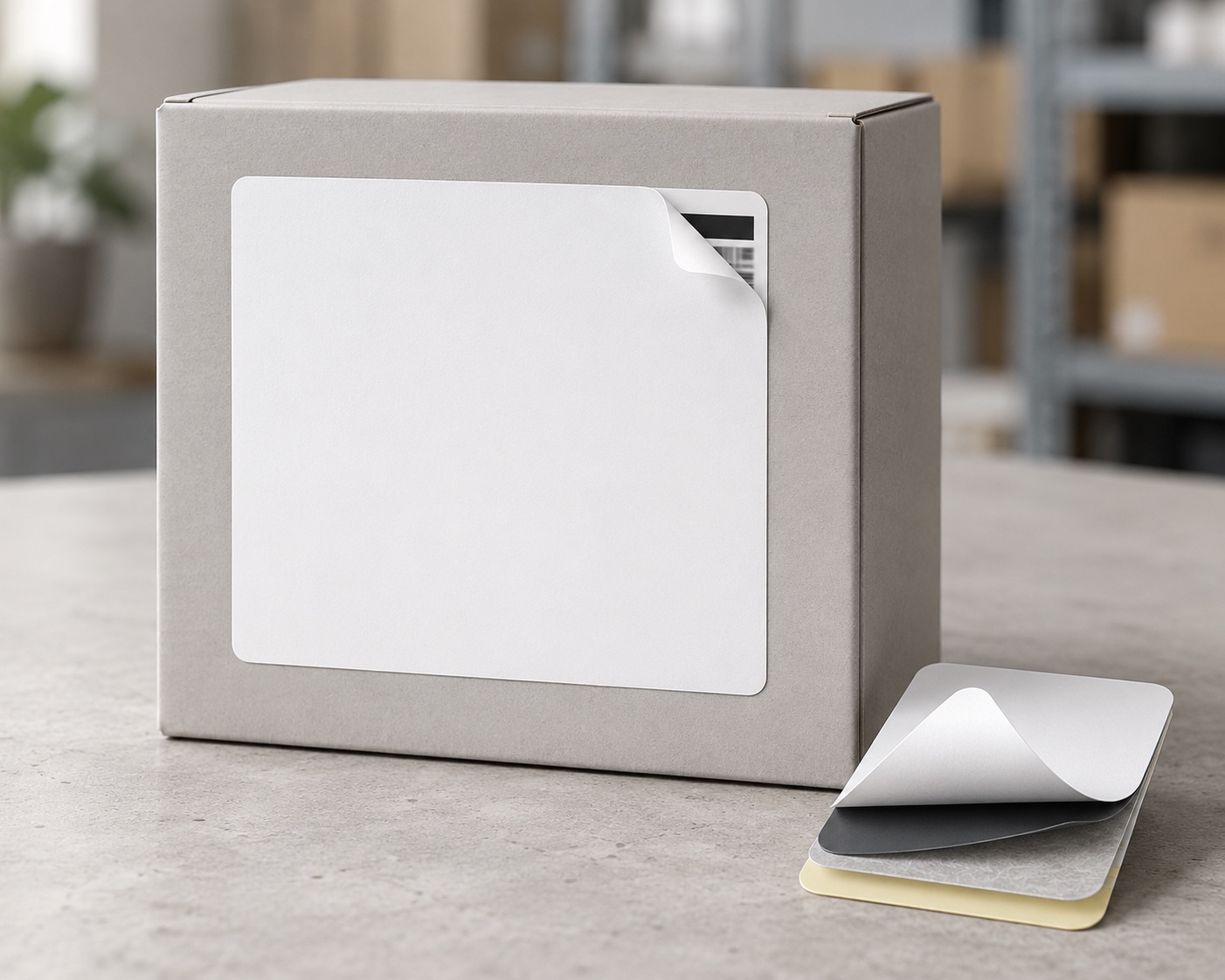
A blockout construction hides what's underneath in the material itself, not in the print. The usual approach is a grey or black layer buried inside the facestock — white on top for print quality, opaque in the middle, white or grey underneath. Opacity is a measured property: standard label paper sits around 80–90 %, while a proper blockout face reaches 99 % or higher. That last ten percent is exactly the difference between "looks fine on the desk" and "no ghosting on the shelf".
Where they earn their keep
- Price and data corrections — cover the wrong price completely rather than peeling the old label and tearing the packaging beneath it.
- Relabelling in logistics — returned or re-routed parcels get a new label over the old one, and only the new barcode is scannable.
- Reused transport packaging — crates and totes that go around many times, where labels stack up over months.
- Market-specific overlabelling — covering an old language version or an outdated ingredient list without repacking.
What to check before you order
Blockout jobs fail at the edges, not in the middle. Four things decide whether the fix holds:
- Opacity of the face, measured — ask for the number, not the word "opaque".
- Adhesive over the old label: you're bonding to a varnished or laminated label surface, not to cardboard. That usually calls for a stronger permanent adhesive than the original label used.
- Size margin: the new label should overlap the old one by a few millimetres on every side. A blockout face hides what it covers — it does nothing for a stripe of old print peeking out beside it.
- Print compatibility: blockout faces are available for thermal transfer, direct thermal and conventional print — the buried dark layer doesn't change the printing surface, but the face weight may need a press adjustment.
Blockout is one of several engineered constructions we supply alongside piggyback labels, tags and protective varnishes — the full range is on the specialty constructions page.
Facing this on a live job? Tell us the surface, the conditions and the press — we'll match a construction and price it within 1–2 business days.
Get a price